Tesla's Unsupervised FSD Gets New 2027 Deadline
Tesla promises driverless capability for customer cars in mid-2027, but only within its limited Robotaxi operating zones.
By Mykola Bondarenko ·
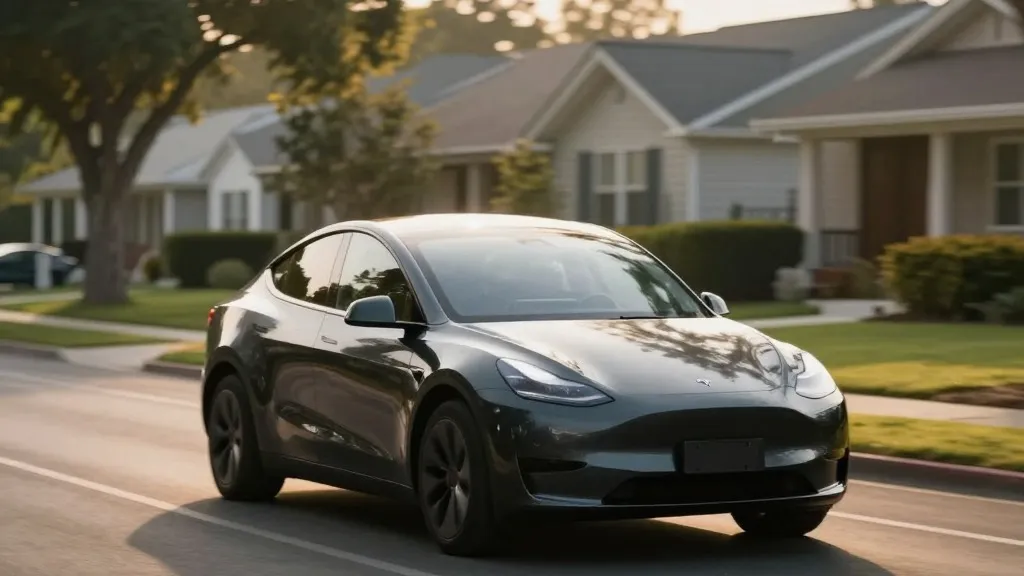
Tesla has officially set a target for the second quarter of 2027 to begin offering unsupervised Full Self-Driving in customer-owned vehicles. This announcement comes during the company's Q3 2026 earnings call, marking the latest specific timeline in a long history of shifting dates for a feature many buyers have waited for since the mid-2010s. While the date sounds concrete, the actual product being described differs significantly from the broad, anywhere-you-go autonomy that was originally marketed to consumers.
The key detail was provided by Ashok Elluswamy, Tesla's head of AI, who clarified that this initial rollout is not a universal software update that allows any owner to sleep in the back seat on a cross-country trip. Instead, the plan is for owners to add their personal vehicles to Tesla's managed Robotaxi fleet. This means the car will only drive itself unsupervised within the specific geographic zones where Tesla already operates its driverless taxi service. Outside of those designated areas, the vehicle will likely require human supervision, effectively turning the owner's car into a part of a localized ride-sharing network rather than an autonomous personal transport device.
Currently, those operational zones are quite limited. Tesla’s Robotaxi service is active in six U.S. metropolitan areas, but the service areas often cover only small slices of those cities. For instance, the Miami zone primarily includes West Miami and a corridor toward Doral and Sweetwater. Similar small geofences were established when the service launched in Orlando and Tampa in July. Within these areas, the vehicles generally stick to low-speed routes and avoid highways or complex urban environments. Notably, the service is not yet unsupervised in the Bay Area due to California regulations that require a safety driver in every vehicle until specific data requirements are met.
The scale of the operation remains modest compared to past hype. By the end of Q3, Tesla reported reaching nearly 2 million cumulative unsupervised miles, a metric that includes the Cybercab joining the Austin fleet just a month prior. Third-party tracking earlier this year suggested only dozens of fully driverless Teslas were on the road, a number far below the hundreds of thousands previously envisioned. In comparison, competitor Waymo had already entered both Orlando and Tampa before Tesla's launch and has logged over 3 million miles in driverless operation.
This new strategy contrasts with the long-standing promise made to FSD buyers, which suggested a future where a software update would enable self-driving anywhere. In July 2025, Elon Musk indicated that unsupervised FSD would be available for personal use in certain geographies by the end of that year. A year before that, he expressed confidence that unsupervised self-driving would be ready the following year. Owners of cars equipped with the older HW3 hardware have also faced uncertainty, as they have been told their computers cannot support the unsupervised version without a clear upgrade path.
Elluswamy emphasized that safety remains the primary bottleneck, which is why Tesla is limiting its operations to lower-speed roads and simpler environments. He expressed hope that these safety hurdles will be resolved by next year, though he acknowledged the uncertainty. For now, the goalpost has moved from a car that drives you anywhere to one that works as a Robotaxi within a controlled, small geofence. This means no highway road trips and no unsupervised commutes unless both your home and workplace happen to fall within one of these limited zones.
Tesla’s approach suggests a cautious, incremental rollout rather than a sudden, widespread launch. By integrating customer cars into its existing Robotaxi infrastructure, the company can manage the operational complexity and safety monitoring centrally. Whether this Q2 2027 target holds will depend on how quickly they can expand these geofences and resolve the regulatory and technical challenges that keep the service contained in specific urban pockets.
Source: Electrek